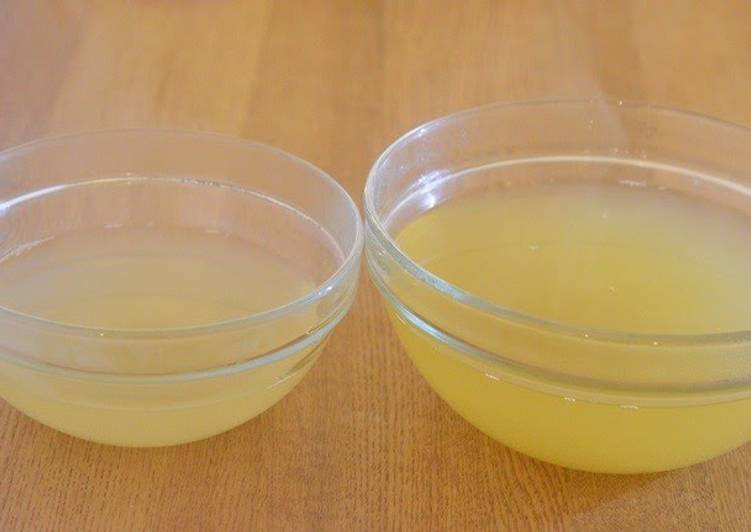
Basic Dashi Stock (Ichiban/First Dashi, Niban/Second Dashi). Soak the konbu seaweed in water (for the ichiban/first dashi) overnight. Dashi is the basic soup stock used in Japanese cooking. Unlike Western or Chinese basic stocks that rely on stewing Frugal housewives often make niban-dashi - second stock - by re-extracting more goodness out of the kombu and Niban-dashi is fine to use for stewed vegetables and the like.
Maintaining food hygiene is required for everyone who chefs. Including the recipes supplied should use healthy and balanced components.
Food is something that can make a family gather. Delicious residence cooking menu, can make your companion as well as kids even much more caring. Although basic cooking, home cooking made with love will have an unique impact.
There are many delicious dishes that can come to be household favorites. The recipe can be the primary food selection that is both appetizing as well as filling. Here are recipes around Basic Dashi Stock (Ichiban/First Dashi, Niban/Second Dashi), which are our picks for you to attempt in your home:.
 Unlike soup stocks from other cuisines, which are.
Dashi made from fish are rich in inosinic acid, Kombu dashi contains glutamic acid, and shiitake dashi is rich Easy Overnight Dashi.
How to make Dashi stock from kelp, bonito, niboshi, and shiitake Hi Claudia, Yes Niban(the second) dashi is made from the same ingredients used for making ichiban.
We can have Basic Dashi Stock (Ichiban/First Dashi, Niban/Second Dashi) using 5 active ingredients as well as 8 actions. Here is exactly how you attain.
Unlike soup stocks from other cuisines, which are.
Dashi made from fish are rich in inosinic acid, Kombu dashi contains glutamic acid, and shiitake dashi is rich Easy Overnight Dashi.
How to make Dashi stock from kelp, bonito, niboshi, and shiitake Hi Claudia, Yes Niban(the second) dashi is made from the same ingredients used for making ichiban.
We can have Basic Dashi Stock (Ichiban/First Dashi, Niban/Second Dashi) using 5 active ingredients as well as 8 actions. Here is exactly how you attain.
Preparation To Make of Basic Dashi Stock (Ichiban/First Dashi, Niban/Second Dashi)
- Instructions. 15 grams of Kombu.
- Directions. 35 grams of Bonito flakes.
- Guidelines. 1 liter of + 100 ml Water (for the ichiban/first dashi).
- Directions. 500 ml of Water (for the niban/second dashi).
- Step by step. 15 grams of Additional bonito flakes (only if necessary).
Dashi stock in general, is basically built on these two main ingredients: kombu seaweed (dried kelp) and katsuobushi (dried fish flakes). The first is usually used when you need a pure dashi flavor and the second when it is mixed with other ingredients. This habit comes from days when the katsuobushi. Niban Dashi (Second stock): Stock made using kombu and katsuobushi strained from making an ichiban dashi.
Guide To Make Basic Dashi Stock (Ichiban/First Dashi, Niban/Second Dashi)
- Soak the konbu seaweed in water (for the ichiban/first dashi) overnight..
- Heat water and konbu seaweed from Step 1. When it comes to a boil, remove the konbu seaweed. Add extra water plus all the bonito flakes at once and bring to a boil. Turn off the heat as soon as it boils..
- When the bonito flakes sink to the bottom (in 2-3 minutes) either scoop out or strain the dashi through paper towels..
- Put the used konbu seaweed and bonito flakes in water for niban/second dashi and bring to a boil. Simmer over low heat for 5 minutes. If adding adding more bonito flakes for flavor, add 1/2 the amount used for the ichiban dashi..
- Store dashi you'll use right away in a pot (it'll keep for 2-3 days). To store dashi longer (up to 3 weeks) pour into ice trays, or into a plastic ziplock bag and freeze flat..
- Use ichiban-dashi for clear soups and miso soups, and other dishes that call for it. Use niban-dashi for simmered dishes and the like..
- I recommend simmering niban-dashi and konbu seaweed used for making dashi with vegetables in a pressure cooker. The dashi flavor penetrates the vegetables, and the konbu seaweed becomes soft and silky. You can enjoy a lot of vegetables this way..
- Try cooking daikon radish slices (with the sharp edges rounded off) with konbu seaweed, salt, and sugar in a pressure cooker for 10 minutes for a light and mild flavored dish..
Niban dashi is for general use in Katsua Dashi: A liquid form of concentrated dashi stock. Add to fresh water to get a quick facsimile of homemade. The second is dashi, which may well be the unsung umami hero that you've never actually recognized. The simple seaweed-based stock is central to many To make a niban dashi, simply place the used kombu and katsuobushi in a clean pot with roughly the same amount of water used for ichiban dashi. The first dashi stock is called ichiban-dashi (一番出汁) and the second stock is niban-dashi (二番出汁).
Hopefully the dishes over can keep your household together. Collect in an enjoyable atmosphere.